How fast can you deploy sanitation after a disaster in Hoboken?
Speed depends on what's already staged and how many units the situation calls for. A single-family block that lost water pressure needs a different response than a shelter housing two hundred people. We keep standard porta potty rental units and handwashing station rental equipment ready to move, and we scale from there based on headcount and site access.
Hoboken's density cuts both ways here. Streets are tight, so a roll-off dumpster rental or a restroom trailer needs about 60 feet of straight clearance behind the truck to place safely, which matters on narrow residential blocks near the waterfront. That clearance requirement doesn't disappear because it's an emergency. We still walk the site, or ask for photos, before wheels roll.
Shelters and command posts run on different math than a single household. OSHA 1926.51(c) sets construction-site ratios at one toilet for 20 workers or fewer, scaling up from there, and that same logic guides how we size a shelter deployment even though a shelter isn't a construction site. If you're staging relief operations out of a school gym or a firehouse, we can walk through counts before delivery. Our emergency porta potty rental page covers the intake questions we ask on every one of these calls, and the portable toilet rental page has more on unit types if you need something beyond a standard.
Water access is its own problem after a disaster. OSHA 1926.51(a)(1) calls for an adequate supply of potable water at any place of employment, and that standard is a good baseline even for a relief site that isn't formally a jobsite. A portable sink rental unit or a hand sanitizer station rental can bridge the gap while municipal water is restored, though sanitizer alone won't satisfy handwashing rules under 29 CFR 1910.141(d)(2), which requires soap and towels or a hand-drying device.
What sanitation equipment works best for a Hoboken emergency?
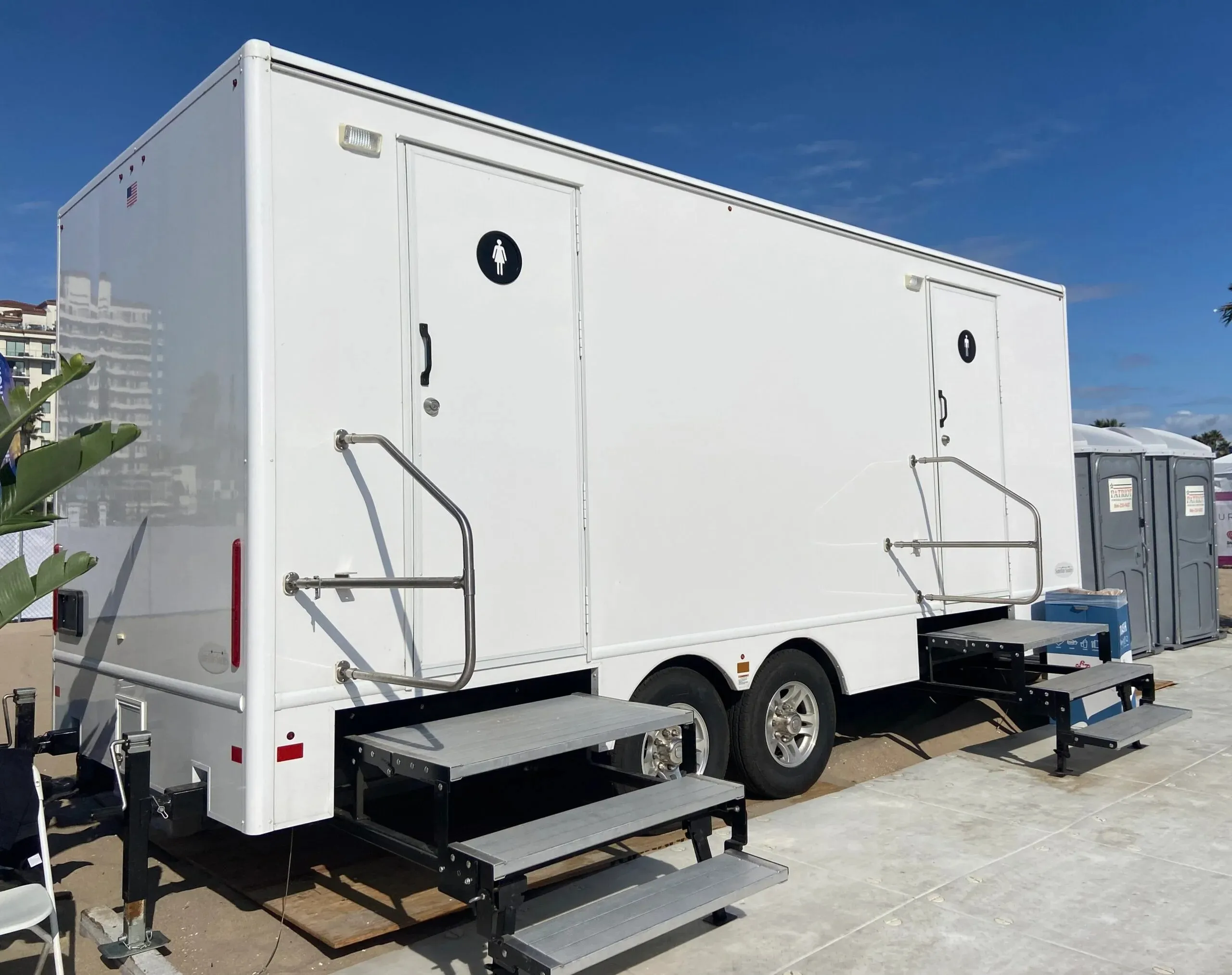
It depends on scale and how long the disruption runs. For a household or a small block, one or two standard units plus a handwashing station usually covers it. For a shelter, a multi-day power outage, or a flood event affecting several buildings, we look at restroom trailer rental options, because a trailer holds more people through more service cycles between pumpouts.
| unit | day | week | month |
|---|---|---|---|
| standard | $100-$350 | $130-$500 | $125-$325 |
| ada | $200-$400 | $240-$400 | -- |
| trailer | $175-$2500 | $1650-$2500 | -- |
If the disruption hits an apartment building's septic or grease system rather than a public gathering, that's a different call entirely. A septic pumping service visit or holding tank rental unit can keep a building functioning while a system is repaired. Residential septic tanks are typically pumped every 3 to 5 years under normal use, but a flood or backup accelerates that timeline fast, and emergency septic service exists for exactly that situation.
Accessibility doesn't get suspended during an emergency. ADA Standards section 213.2 requires that at least 5 percent of clustered single-user units be accessible, with a minimum of one, so shelter and relief deployments need an ada accessible porta potty unit in the mix, not as an afterthought. The reach and clearance specs in ADA Standards 308.2.1 and 304.3.1 still apply to placement, even on a rushed timeline.
Debris cleanup often follows right behind the sanitation response. Storm damage means downed limbs, ruined drywall, waterlogged furniture. A 10 yard dumpster rental handles a single household's flood debris; a 20 yard dumpster rental or 30 yard dumpster rental suits a block-wide cleanup. Check what cannot go in a dumpster before loading, since hazardous flood debris often needs separate handling.
Why does site access matter so much for emergency deployment?
Hoboken's blocks are narrow, parking is tight, and a disaster only makes staging harder. Downed trees, flooded intersections, and emergency vehicles competing for the same curb space all slow a delivery truck down. We plan routes the way we would for any construction site services job, but with less lead time and more improvisation.
If Hoboken's own resources are stretched thin, we can also pull from nearby coverage. Weehawken sits 2.4 miles north and Secaucus is 4.9 miles northwest, both close enough to stage extra units if a Hoboken-based deployment needs backup fast. See service areas for the full coverage map, and porta potty rental in Weehawken, NJ or porta potty rental in Secaucus, NJ if a relief operation spans township lines.
Lighting matters once units are placed, especially with widespread power loss. A light tower rental unit paired with a temporary power pole keeps a relief site visible and usable after dark, and illumination minimums under OSHA 1926.56(a) are a reasonable standard to follow even outside a formal jobsite. If site security is also a concern amid the chaos, temporary fence rental or crowd control barrier rental keeps foot traffic away from staging equipment.
How many porta potties does a shelter need?
It scales with headcount and how long people stay. OSHA 1926.51(c) uses one unit per 20 people as a construction baseline, and that ratio is a reasonable starting point for a shelter too. See how many porta potties do I need for the full breakdown by group size and duration.
Can you deliver same day during an active emergency?
Often yes, depending on unit availability and street access at the time of the call. Narrow Hoboken blocks and blocked roads can slow delivery, so call contact directly rather than submitting a standard quote form when time is critical.
Do disaster relief rentals cost more than standard rentals?
Not automatically. Pricing follows the same day, week and month bands as any other rental; a standard unit still runs $100 to $350 per day. Duration and volume drive cost more than the emergency label does.
What happens if a septic system fails during a storm?
A failed system usually needs pumping fast, plus a temporary holding tank while repairs happen. Call septic pumping service or review septic tank warning signs to see if failure is already underway before water gets worse.
Is handwashing required at an emergency shelter?
Soap and a drying method are the standard under 29 CFR 1910.141(d)(2); hand sanitizer alone doesn't meet it. Pair a handwashing station rental unit with any restroom deployment, and see handwashing requirements for specifics.
Next step
Get a delivery date
Tell us the address, the dates and the headcount. We size the order and confirm the route.