
How do porta potties work day to day?
Every unit is a self-contained box. Waste drops into the holding tank, chemical additives break it down and knock back odor, and a vent stack pulls air up through a filter instead of out the door. There's no plumbing, no water line, nothing to freeze or back up the way a house line can. A standard porta potty rental uses this setup, and it's the same basic design whether it's parked at a job site or a backyard party. For a construction worker running to a porta potty between pours, the door latch and the toilet paper holder are the only moving parts that matter. ANSI/PSAI Z4.3, the industry service standard, sets a baseline of one visit per week for up to 10 users across a 40 hour week, though busy sites in Hoboken usually get serviced more often. If you're trying to figure out counts for a crew, the how many porta potties do I need guide walks through the math, and OSHA portable toilet requirements covers the ratio rules in plain language.
How do flushable porta potties work?
A deluxe or flushable unit adds a small onboard freshwater tank and a foot pump or battery flush that rinses the bowl after each use, instead of relying only on the holding tank below. It still doesn't tie into a sewer line. The flush water and waste both go into the same holding tank, just like a standard unit, so service crews empty it the same way. Hoboken Porta Pros offers this step up through the deluxe flushable porta potty line for weddings, office sites, and anyone who wants the unit to feel closer to a real bathroom. For accessibility, an ADA accessible porta potty follows ADA Standards section 304.3.1, which calls for a 60 inch turning circle inside the unit, and section 404.2.3, which sets a 32 inch minimum clear door opening. ADA Standards section 213.2 also requires that where multiple single-user units are grouped, at least 5 percent, and never fewer than one, has to be accessible. That matters for events along the Hoboken waterfront where several units get clustered in one spot.
How does a portable sink work?
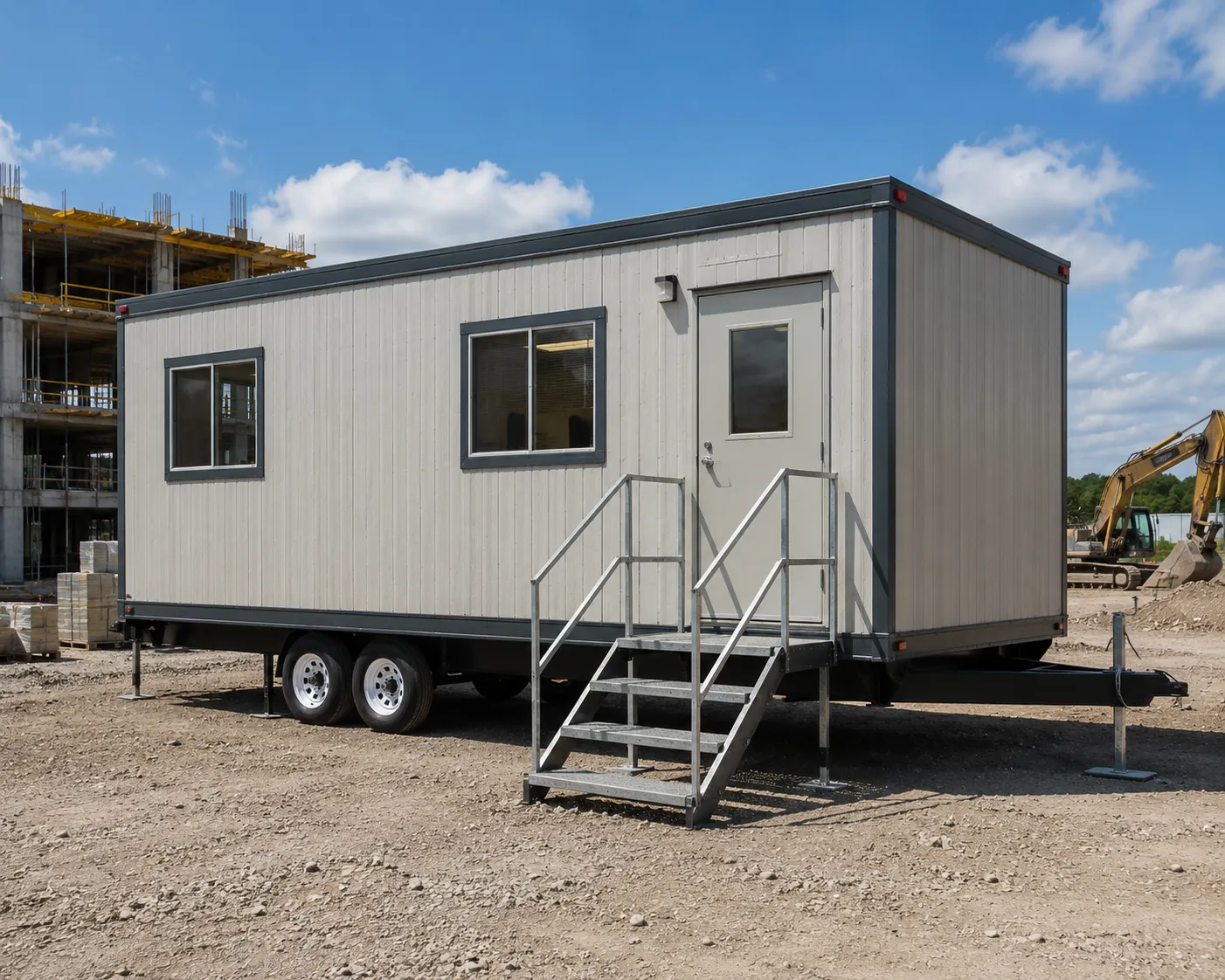
A portable handwashing station carries its own fresh water in a top tank, gravity or foot pump feeds it down to the faucet, and the gray water drains into a tank underneath. No hose bib, no drain line into the ground. Soap and paper towels are refilled during the same service visit as the toilets. This matters more than people think. 29 CFR 1910.141(d)(2) requires washing facilities to have soap and towels or a hand drying device, hand sanitizer alone doesn't satisfy that. On construction sites, OSHA 1926.51(f)(1) requires washing facilities specifically where workers apply paints, coatings, herbicides or insecticides, so a job doing exterior painting or pest treatment in Hoboken needs a handwashing station rental or portable sink rental on top of the toilets, not instead of them. Farm and labor crews fall under a different rule, OSHA 1928.110, which calls for one facility per 20 workers within a quarter mile walk, relevant for anyone running farm and agricultural restrooms just outside the city.
What chemicals keep a porta potty from smelling?
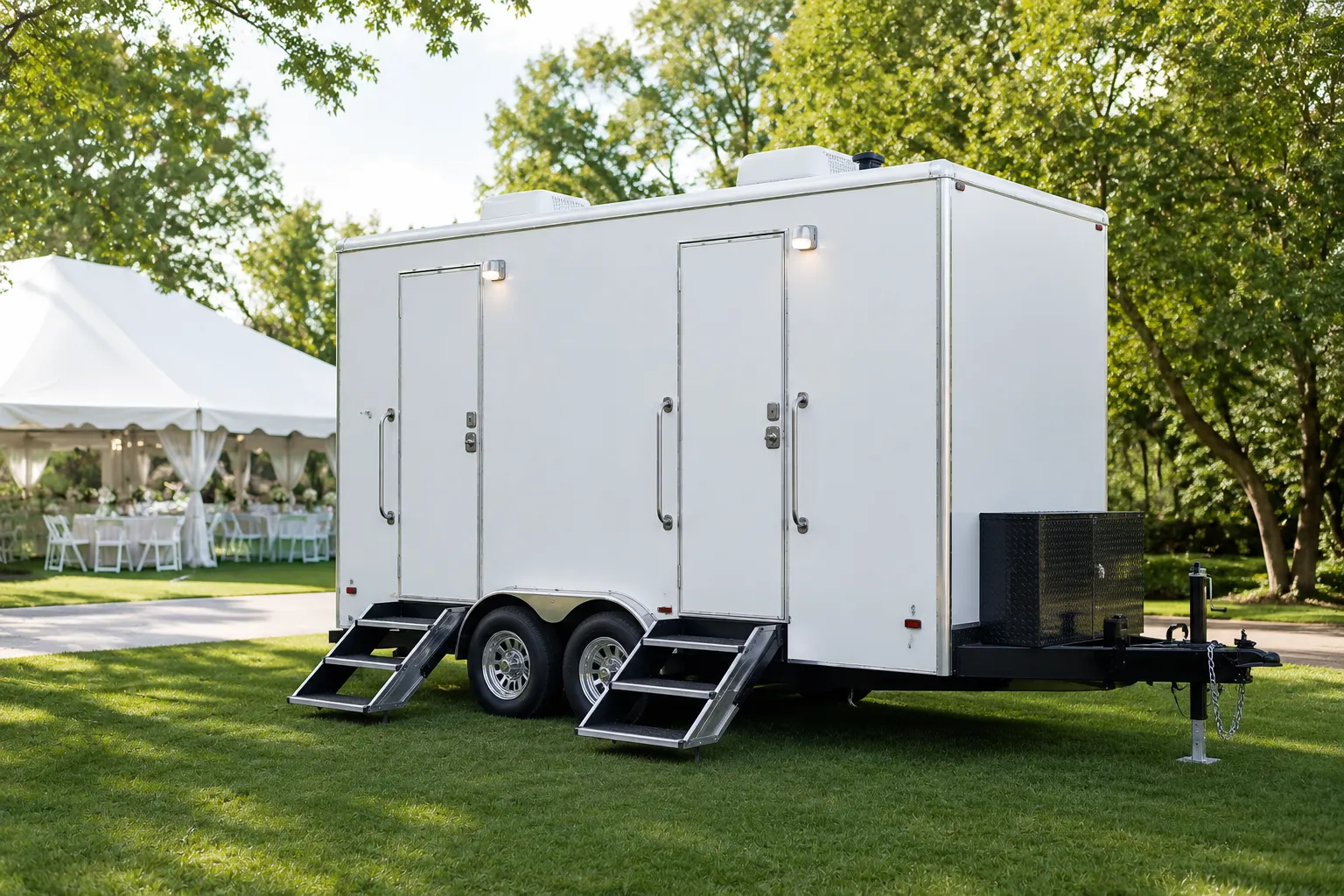
The blue liquid in the tank is a deodorizer and waste digester, usually a mix of surfactant, dye, and enzyme or formaldehyde-based breakdown agents, and it's what keeps a unit usable between service stops. It's added fresh at each pump-out, not something a renter tops off themselves. People searching for portable toilet chemicals near me are usually asking how long a unit can sit before it smells, and the honest answer is that it depends on use volume, temperature, and how often Hoboken Porta Pros comes back to service it. Hot weather breaks the chemical down faster. If a unit sits unused, like a camping porta potty at a weekend site, it can hold much longer. Curious how the schedule works in practice? How often are porta potties cleaned breaks down typical intervals, and do porta potties smell covers what actually causes odor versus what's just a myth.
Septic tanks work on a similar chemistry but a different scale. A residential tank is typically pumped every 3 to 5 years depending on tank size and household, and additives are never a substitute for that pump-out. Anyone asking about septic tank cleaning chemicals for a home system should read septic tank warning signs before assuming a chemical treatment will fix a slow drain. Hoboken Porta Pros runs septic pumping service and septic tank cleaning for that side of the business, separate from the portable units.
What size is a standard porta potty unit?
A standard unit measures about 44 by 48 inches on the ground and stands roughly 92 inches tall, with a 60 to 70 gallon holding tank underneath the seat. That footprint is why delivery crews need clear, firm, level ground, matching ADA Standards section 302.1 for stable surfaces, before drop-off.
Do porta potties need a water hookup to work?
No. Standard units run entirely without water, using chemical treatment in the tank instead. Deluxe units add a small onboard freshwater reservoir for flushing, but that water still drains into the same sealed tank, so nothing connects to a building's plumbing or a sewer line.
How often does a porta potty get serviced in Hoboken?
Service intervals follow ANSI/PSAI Z4.3's baseline of once weekly for lighter use, but job sites and events in Hoboken often get twice-weekly visits. Weehawken sites 2.4 miles north follow the same schedule logic. Request a custom interval through request a quote.
Can a porta potty be used for a multi-day event?
Yes. Multi-day events just need a higher unit count and sometimes a mid-event service stop. The event restroom rental and festival restroom rental pages cover how Hoboken Porta Pros sizes units against expected headcount and event length.
Is a handwashing station required alongside porta potties?
It depends on the work. OSHA 1926.51(f)(1) requires washing facilities where paints, coatings, herbicides or insecticides are applied. General sanitation counts fall under OSHA 1926.51(c). Check handwashing requirements for a breakdown by job type.
Next step
Get a delivery date
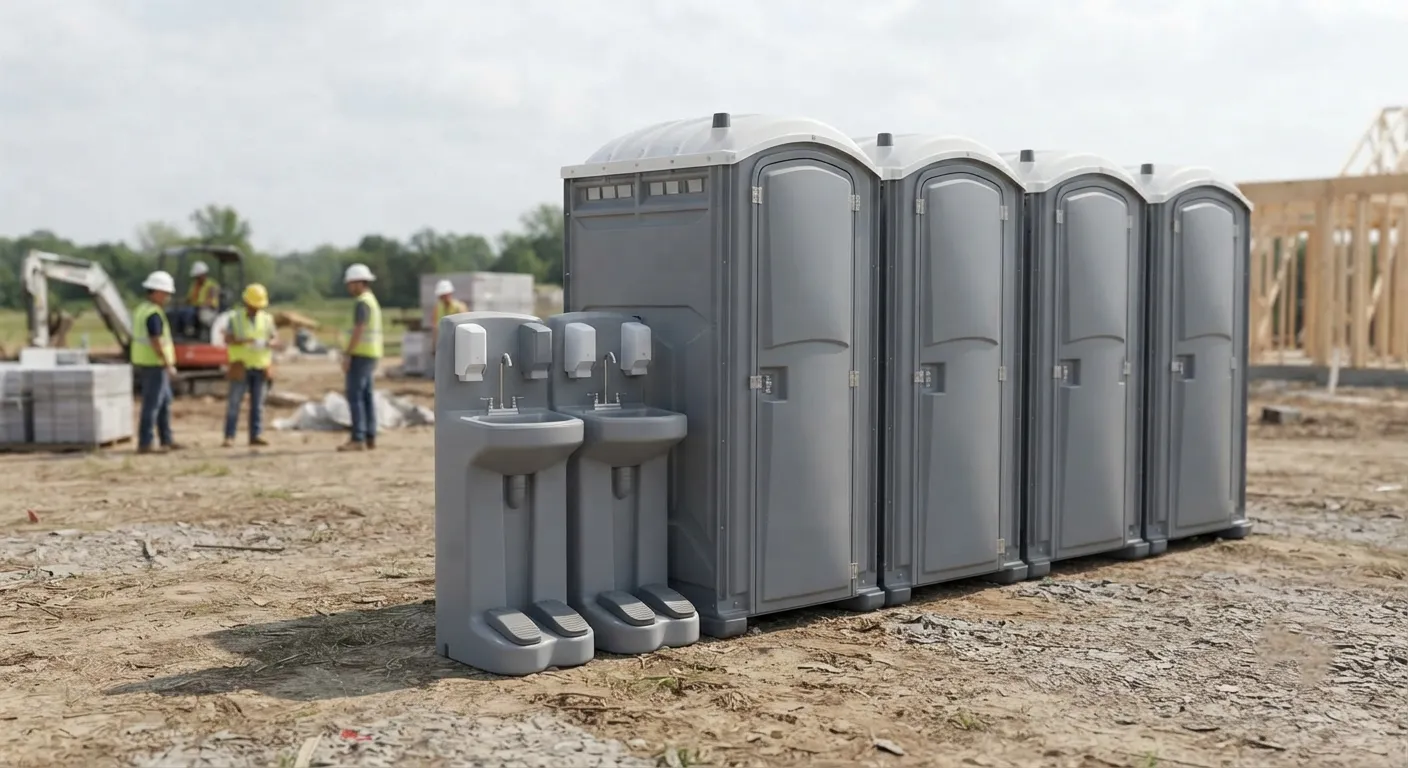
Tell us the address, the dates and the headcount. We size the order and confirm the route.