
Where Should a Porta Potty Go on a Hoboken Job Site or Event?
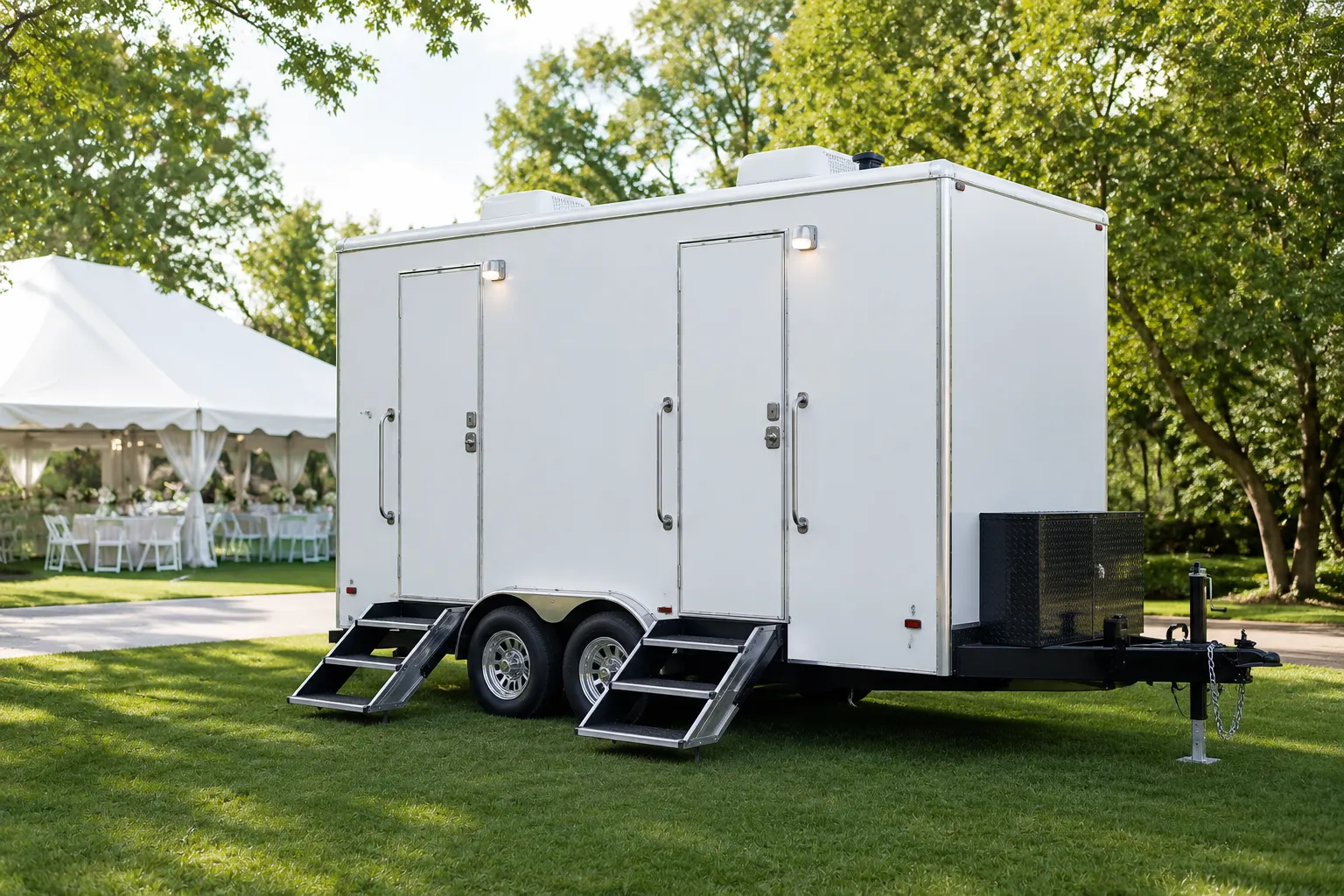
Pick flat, firm ground first. ADA Standards section 302.1 calls for surfaces that are stable, firm and slip resistant, and that rule matters just as much for the delivery crew rolling a hand truck across it as it does for a guest in a wheelchair. Keep the unit within reach of porta potty rental service trucks, since a roll-off dumpster or a restroom unit both need a clear path in and a clear path out. If you are placing near a curb cut or sidewalk, leave a 36 inch accessible route per ADA Standards section 403.5.1 so foot traffic and wheelchairs both clear it. Avoid gas meters, fire hydrants, and anything overhead. If the spot sits in the public right of way, that placement needs confirming with the City of Hoboken before delivery, since we cannot verify a blanket rule for every block. Sites running a construction dumpster alongside a toilet bank should keep both units on the same firm pad so one truck visit can service everything. For weekend events near the waterfront, a restroom trailer sometimes fits better than standalone units, since it needs one hookup point instead of several footprints.
How Many Units Do I Need and Where Do They Cluster?
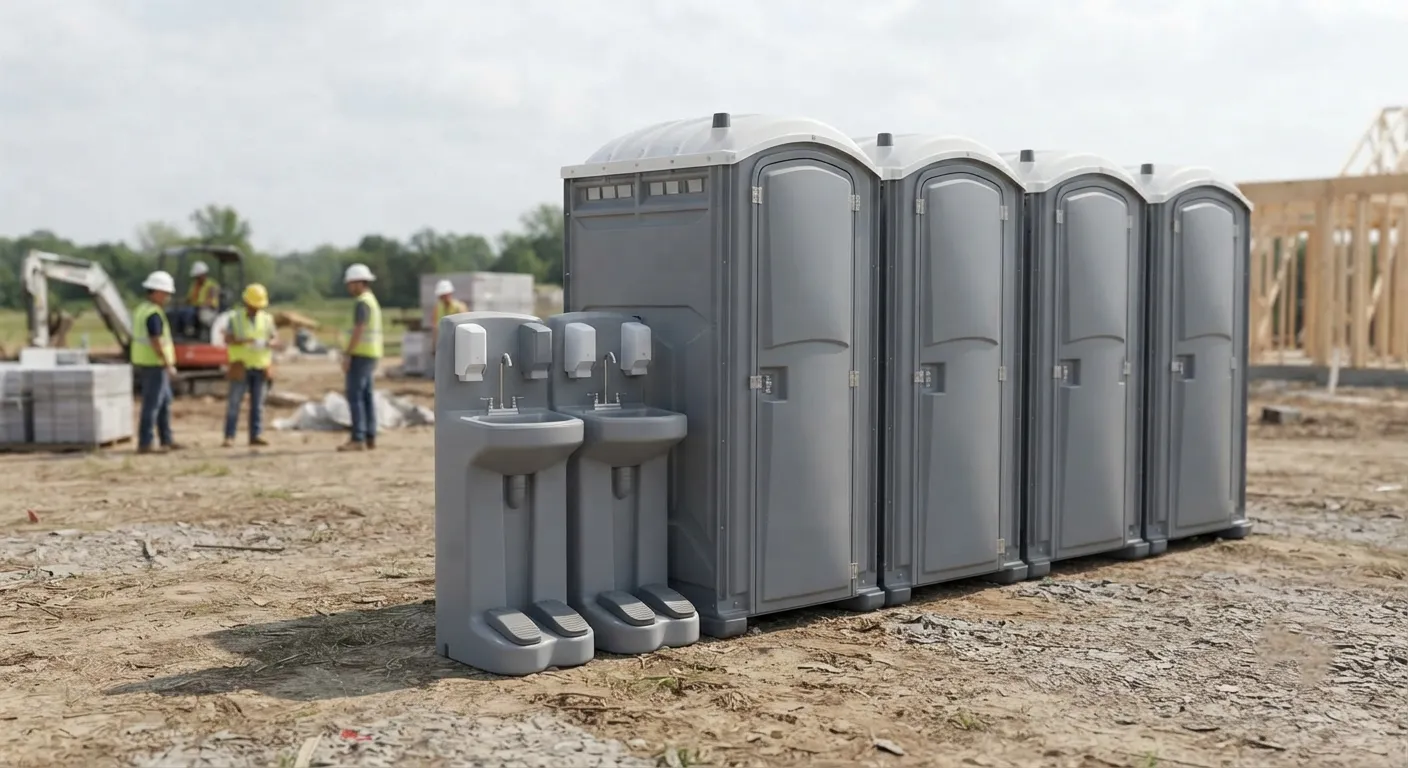
Crew size drives the count more than the lot size does. OSHA 1926.51(c)(1) sets the baseline: one toilet for 20 or fewer construction workers, then one toilet seat and one urinal per 40 workers once you pass 20, tightening to one per 50 at 200 or more. Use our porta potty needs calculator to size a Hoboken crew correctly before you call. When you cluster several standard units, ADA Standards section 213.2 requires at least 5 percent to be accessible, never fewer than one, so a bank of ten needs at least one ADA accessible porta potty with a 60 inch turning circle under section 304.3.1. Space units a few feet apart so doors swing fully open, and keep the accessible unit closest to the accessible route, not tucked behind the others. Farm crews doing hand labor fall under a different rule: OSHA 1928.110 calls for one facility per 20 workers, reachable within a quarter mile walk, which matters for anyone running farm and agricultural restrooms outside the city core.
What Rules Apply to Dumpster and Container Placement Near a Porta Potty?
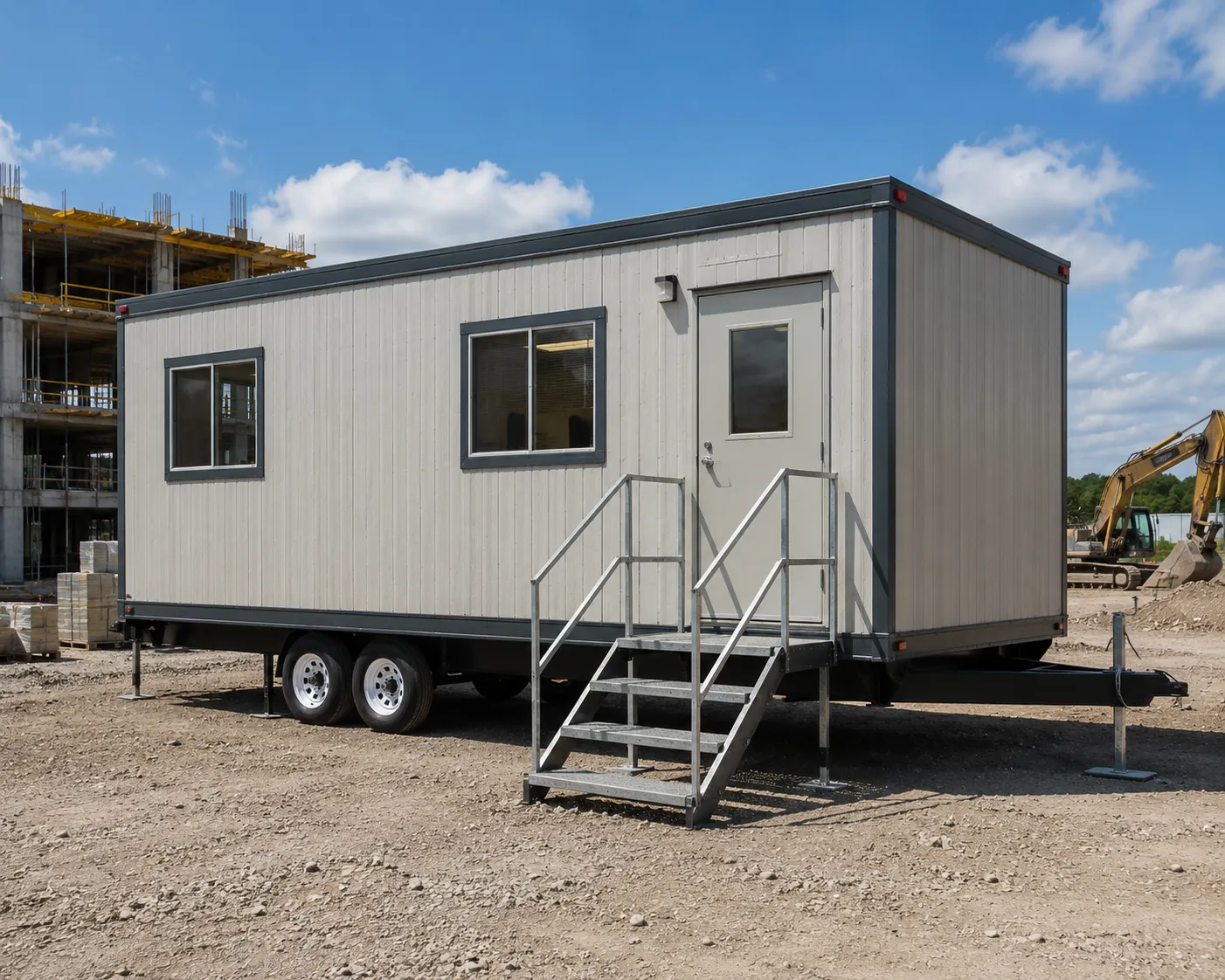
A 20 or 30 yard roll-off needs about 60 feet of straight clearance behind the truck to drop safely, so plan that lane before the toilets go down, not after. If you are asking about dumpster placement permit cost or a dumpster placement permit for a Hoboken curb spot, that is a municipal question we cannot answer from a price sheet. It is not in our fact bank, and every town prices it differently, so confirm with the City of Hoboken's code office before delivery day. Pair a 10 yard dumpster or 20 yard dumpster with a nearby handwashing station when crews are cutting, painting or coating, since OSHA 1926.51(f)(1) requires washing facilities specifically where workers apply paints, coatings, herbicides or insecticides. Keep both units off any marked fire lane and check dumpster weight limits before loading demo debris. A storage container or mobile office trailer parked on the same pad should sit level too; if a mobile office trailer replacement doors issue comes up mid-job, that is a maintenance call to us, not a placement rule, and swapping a 32 inch door per ADA Standards section 404.2.3 is a spec worth confirming if the unit needs to stay accessible.
Do Septic and Handwashing Units Have Their Own Placement Rules?
Yes, mostly about drainage and reach. A grease interceptor gets pumped once fats, oils, grease and solids hit 25 percent of the liquid depth, so grease trap pumping crews need a clear approach to the tank lid, not a blocked alley. Residential septic tanks in the region typically get pumped every 3 to 5 years depending on tank size and household count, which is worth knowing if you are searching for a placerville septic pumping service model to compare against Hoboken timing, though our crews work the Hoboken side of the river, not California. Place a holding tank rental or septic pumping truck route with the same 60 feet of clearance you would give a roll-off. Handwashing stations need soap and towels or a hand-drying device under 29 CFR 1910.141(d)(2); hand sanitizer alone does not satisfy that. If you are chasing an ozark river portable sink replacement parts question, that is a manufacturer part number issue, not a placement rule, and we can source common parts for units we rent. Keep operable parts, like a sink pump or a spigot, reachable per ADA Standards section 309.4, no tight grasping or twisting, 5 pounds max force.
Can I put a porta potty on the street in front of my house in Hoboken?
Sometimes, but the public right of way needs city confirmation first. A driveway or a fenced yard corner avoids the question entirely. Check our porta potty permit requirements page before delivery day, and call ahead so we can plan the truck route.
How close does a porta potty need to be to the work area?
Close enough that workers do not skip using it. OSHA 1928.110 sets a quarter mile walk as the outer limit for hand-labor field crews; general construction sites should stay tighter than that for real compliance.
Do I need an accessible unit for a small backyard event?
If you are only placing one unit, make it accessible when the guest list might need it. ADA Standards section 213.2 kicks in once you cluster multiple units, requiring at least 5 percent to be accessible.
Can a dumpster and a porta potty share the same pad?
Yes, if the ground is firm and there is 60 feet of straight clearance for the roll-off truck. Keep the toilet door swing clear of the dumpster's drop zone.
What ground surface works best for placement?
Level, firm and slip resistant, per ADA Standards section 302.1. Asphalt, packed gravel or a driveway pad all work; soft grass and slopes do not, especially after rain in Hoboken.
Next step
Get a delivery date
Tell us the address, the dates and the headcount. We size the order and confirm the route.